Online cryptocurrency accounts are attractive targets for scammers because they can contain valuable digital assets and personal information. A fake login page can look almost identical to a legitimate exchange website, making it difficult to notice the difference at first glance. 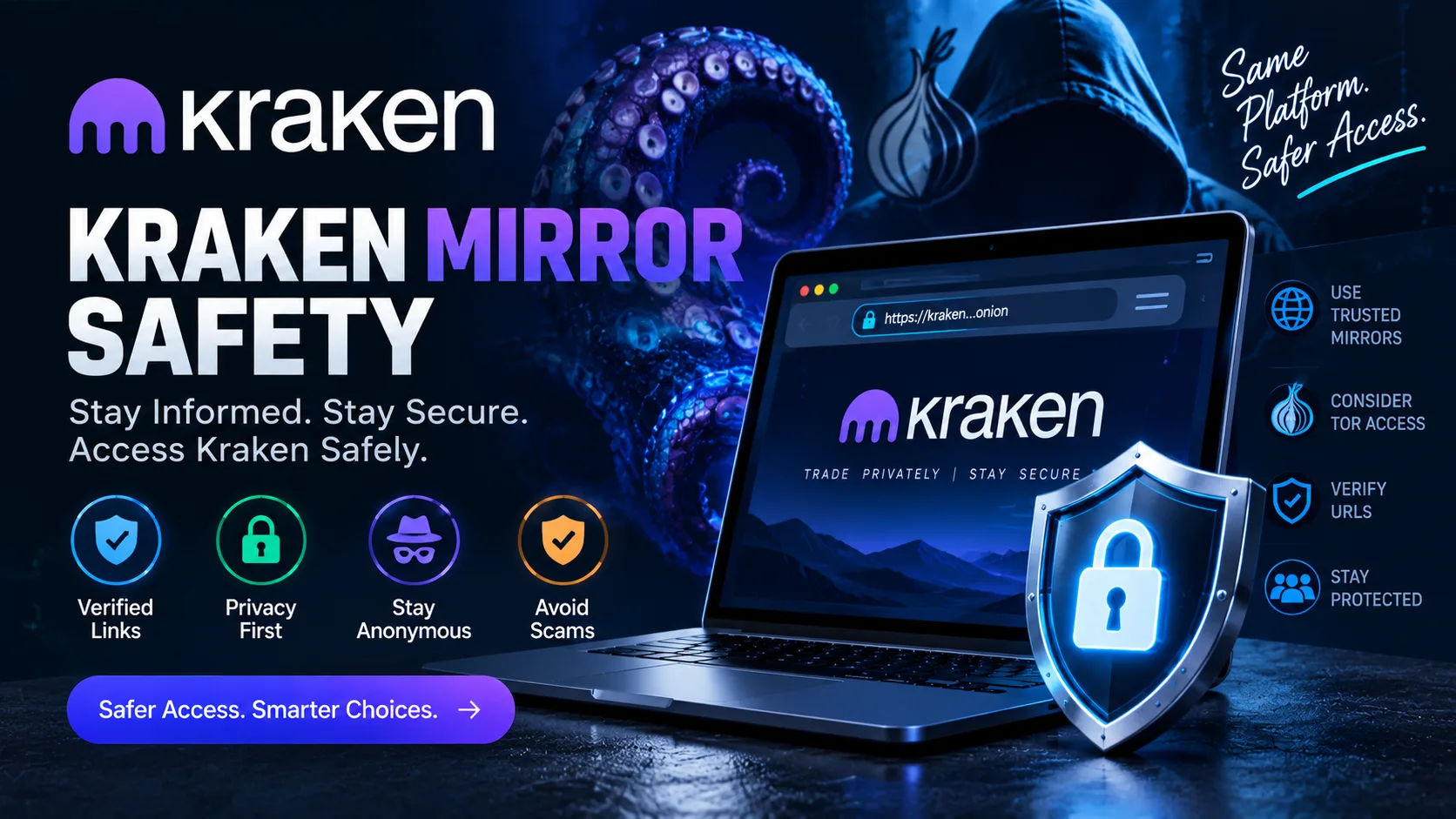
A fake login usually attempts to imitate the appearance of a real Kraken sign-in page. The goal is often to persuade a user to enter an email address, password, authentication code, or other security information. Kraken login safety поддельный вход Kraken awareness is therefore important for anyone who uses cryptocurrency services online.
What Is a Kraken Fake Login?
A Kraken fake login is a fraudulent webpage designed to resemble the legitimate Kraken login experience. Scammers may copy familiar colors, logos, layouts, buttons, and other visual elements.
The page may arrive through an email, text message, social media message, advertisement, search result, or another website. The message may claim that the user's account needs verification or that unusual activity has been detected.
The fake page can then request login information. Depending on the scam, the information entered may be collected by the attacker.
The most important point is that a professional-looking page is not automatically trustworthy. Modern phishing pages can be visually convincing, so users should examine the website address and the surrounding circumstances rather than relying only on appearance.
Why Are Fake Login Pages Difficult to Recognize?
They Copy Familiar Designs
Scammers understand that users make quick decisions when they see a familiar brand. A fraudulent page may therefore copy the general design of a legitimate service.
The logo may look correct, and the page may contain familiar fields such as an email address and password box.
However, visual similarity does not prove authenticity. The website address and the way the page was reached are much more important indicators.
They Create a Sense of Urgency
Many phishing attempts use urgent language.
For example, a message might claim that an account will be restricted unless the user signs in immediately. Another message might say that suspicious activity requires immediate verification.
This pressure is intentional. When people feel rushed, they are more likely to overlook warning signs.
Good Kraken login safety поддельный вход Kraken habits include slowing down whenever a message demands immediate action.
Check the Website Address Carefully
One of the simplest ways to detect a fake login is to inspect the domain before entering information.
Do not focus only on the first part of the address. Look at the complete domain name and the spelling.
Scammers can create addresses that contain words associated with Kraken while actually being controlled by another domain.
For example, a suspicious address might contain additional words, unusual characters, misspellings, or a completely different domain ending.
Watch for Misspellings
Fraudulent websites sometimes use addresses that look almost correct.
A single changed letter can be difficult to notice when someone is reading quickly.
Always examine the spelling carefully rather than assuming that a familiar-looking name is genuine.
Do Not Trust HTTPS Alone
A padlock icon or HTTPS connection does not prove that a website is legitimate.
HTTPS means that the connection is encrypted, but malicious websites can also obtain HTTPS certificates.
Therefore, users should treat HTTPS as one security feature rather than proof of authenticity.
Consider How You Reached the Login Page
The source of the link is another important clue.
If a login link arrives unexpectedly through an email or message, do not automatically use it.
Instead, consider opening your browser independently and navigating to the official service through a trusted route.
This reduces the risk of being redirected to a fraudulent website.
Be Careful With Search Advertisements
Search engines can display advertisements above ordinary search results. Attackers may attempt to use misleading advertisements to direct people toward fraudulent websites.
For sensitive accounts, do not assume that the first result is automatically safe.
Check the domain carefully before clicking or entering any information.
Examine Unexpected Messages
A fake login attempt often begins with a message.
The message might claim that there has been a login attempt, account problem, security issue, payment problem, or verification request.
Unexpected security messages deserve extra attention.
Look at the Sender
Do not rely only on the display name.
Email systems allow senders to display names that may appear trustworthy. The actual sender address provides more useful information.
Even then, a familiar-looking address should not automatically be trusted if the message contains a suspicious link or unusual request.
Look for Pressure and Threats
Messages that threaten immediate account closure or demand urgent action should be treated cautiously.
A legitimate security process should not require you to ignore normal safety checks simply because a message says the matter is urgent.
This is an important part of Kraken login safety поддельный вход Kraken awareness.
Look for Suspicious Page Behavior
The appearance of a page is only one clue. Its behavior can also reveal a problem.
Be cautious if a supposed login page unexpectedly requests information that does not seem necessary for normal authentication.
For example, users should question unexpected requests for recovery information, security codes, wallet details, or other sensitive credentials.
A page that repeatedly redirects the browser or behaves strangely should also be treated with caution.
Never Share Authentication Codes With Others
Authentication codes are security credentials.
If someone asks you to provide a one-time authentication code through chat, email, telephone, or another communication channel, treat the request as suspicious.
A scammer may already have some information and be trying to complete an unauthorized login.
Entering a code into a legitimate authentication screen is different from sending that code to another person.
Keeping authentication codes private is a basic part of Kraken login safety поддельный вход Kraken.
Use Bookmarks Carefully
A bookmark created from a trusted official website can make it easier to return to the correct login page.
Users should avoid creating bookmarks from links received in unexpected messages.
Before saving a page as a bookmark, verify that the domain is correct.
This small habit can reduce the chances of accidentally returning to a fraudulent page later.
Use a Password Manager When Appropriate
A reputable password manager can make unusual login domains easier to notice.
Depending on the password manager, stored credentials may not automatically appear on an unfamiliar website.
This can provide an additional warning that something is different.
However, users should never treat a password manager as their only security control. Website verification and careful browsing remain important.
Enable Strong Account Security
Strong account protection can reduce the consequences of credential theft.
Users should follow the security options offered by the legitimate cryptocurrency service and use strong, unique credentials.
Multi-factor authentication can provide an additional security layer.
It is also important to protect the email account associated with a cryptocurrency account because access to email can sometimes affect account recovery.
Common Signs of a Fake Kraken Login
Several warning signs can appear together.
An Unusual Website Address
A strange domain, misspelling, unfamiliar domain ending, or unexpected subdomain should make you stop before entering credentials.
An Unexpected Login Request
If you were not trying to access your account but suddenly receive a message telling you to log in, investigate independently.
Excessive Urgency
Messages demanding immediate action are common in phishing attempts.
Unusual Requests
Be cautious if a login page or support representative asks for information that you would not normally provide.
Poor Grammar or Strange Formatting
Spelling mistakes, unnatural sentences, inconsistent formatting, and unusual wording can indicate a fraudulent message.
However, perfect grammar does not prove legitimacy. Some scams are professionally written.
Unexpected Redirects
If clicking a link sends you through several unfamiliar pages before showing a login screen, stop and investigate.
What Should Users Do If They Find a Suspicious Login Page?
The safest immediate action is to avoid entering credentials.
Close the suspicious page instead of testing it with real account information.
If the link came from an email or message, avoid replying to the sender.
Do not provide passwords, authentication codes, recovery information, or other sensitive details.
If you need to access your account, independently navigate to the legitimate service rather than returning through the suspicious link.
What If You Already Entered Your Password?
If you believe you entered your credentials into a fake login page, act quickly.
First, access the legitimate service through a trusted route and change the affected password.
If the same password is used anywhere else, change it on those accounts as well.
Review your account security settings and look for activity you do not recognize.
If available, contact the legitimate platform's official support channel and explain what happened.
Do not use contact information supplied by the suspicious webpage.
What If You Entered an Authentication Code?
Entering an authentication code into a phishing page can be more serious because the attacker may be attempting to use that information immediately.
Secure the account through the legitimate website or application as soon as possible.
Review active sessions, account settings, security methods, and other available protections.
If you notice unauthorized activity, report it through the platform's legitimate support process.
Avoid communicating with anyone who contacts you claiming they can recover funds in exchange for payment.
Beware of Fake Customer Support
Scammers sometimes impersonate cryptocurrency support representatives.
They may contact users through social media, messaging platforms, email, or other channels.
A fake support representative may claim that an account has a security problem and ask the user to provide credentials or authentication information.
Users should be especially cautious when someone unexpectedly offers to "fix" an account problem.
Never assume that a person is legitimate simply because they know your name, email address, or some information about your account.
How to Build Better Login Habits
Good security does not depend on recognizing every possible scam.
Instead, develop consistent habits.
Always verify the website before logging in.
Avoid unexpected login links.
Use unique passwords.
Enable appropriate multi-factor authentication.
Keep devices and browsers updated.
Do not share authentication codes.
Be suspicious of urgent requests.
Check account activity regularly.
These simple practices make Kraken login safety поддельный вход Kraken much easier to maintain.
Why Users Should Slow Down
Many successful phishing attempts depend on speed.
A person receives an alarming message, clicks the link, sees a familiar logo, and immediately enters a password.
The entire process can take less than a minute.
Taking even thirty seconds to inspect the domain and consider why the message was received can make a major difference.
Security often depends on small decisions made before sensitive information is entered.
A Simple Detection Checklist
Before signing in, ask yourself several questions:
-
Did I intentionally open this website?
-
Is the complete domain correct?
-
Did I receive an unexpected message asking me to log in?
-
Is the message creating unnecessary urgency?
-
Does the page request unusual information?
-
Am I being asked to share an authentication code?
-
Does the page behave differently from what I normally expect?
-
Can I independently open the legitimate service instead?
If any answer raises concern, stop and verify the website before continuing.
How to Avoid Future Fake Login Attempts
Prevention is easier when users make secure browsing routine.
Do not click login links from unexpected messages.
Instead, access important financial and cryptocurrency services through a trusted bookmark or by independently navigating to the official website.
Keep your operating system, browser, security software, and password manager updated.
Avoid installing unknown browser extensions because malicious extensions can interfere with normal browsing.
Also be careful when using shared computers or public devices.
Educating Family Members and Friends
Security improves when everyone who uses cryptocurrency understands phishing.
Explain that a website can look genuine while still being fraudulent.
Teach others to inspect domains and avoid unexpected login links.
Most importantly, explain that authentication codes and passwords should never be shared with strangers claiming to be support staff.
Simple education can prevent many avoidable mistakes.
Conclusion
Detecting a fake Kraken login begins with skepticism and careful verification. Users should not rely on logos, colors, page design, or HTTPS alone because fraudulent websites can imitate many elements of legitimate services.
The website address should be checked carefully. Unexpected links should be treated cautiously, particularly when they arrive with urgent warnings or threats. Users should also avoid sharing passwords and authentication codes with anyone who requests them through messages, calls, or social media.
Strong security practices provide another layer of protection. Unique passwords, appropriate multi-factor authentication, updated software, secure browsing habits, and regular account monitoring can reduce the chances of a successful attack.
If a suspicious login page appears, the safest approach is to stop before entering information and access the legitimate service independently. If credentials have already been entered, users should respond quickly by securing the legitimate account and contacting official support through a trusted channel.
Understanding Kraken login safety поддельный вход Kraken is not about memorizing every possible phishing trick. It is about developing reliable habits that make suspicious login attempts easier to recognize.
By slowing down, checking the domain, questioning unexpected messages, protecting authentication information, and using trusted access methods, users can make it considerably harder for fake login pages to succeed.